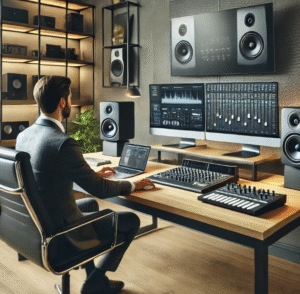
The Sound of Progress
In a world dominated by rapid digital transformation, IT companies must stay ahead not just in code, connectivity, and cybersecurity, but also in the environment they create for both their employees and clients. Surprisingly, one of the most overlooked areas in achieving technological excellence and boosting productivity is the auditory experience. That’s where an unlikely but powerful partnership opportunity arises: teaming up with Hi-Fi (high-fidelity) audio stores.
While it may seem unconventional, the fusion of IT companies and Hi-Fi stores can yield powerful synergies—enhancing workspaces, innovating client-facing experiences, and establishing a stronger emotional connection to technology through sound. This article explores the compelling reasons why IT companies should consider building strategic partnerships with Hi-Fi retailers, not only to improve internal performance but also to strengthen customer engagement and differentiation in a crowded market.
1. Enhancing Work Environments for Better Productivity 🎶
The right sound environment has been scientifically proven to increase productivity, enhance focus, and even reduce stress in workplaces. IT professionals often work long hours coding, managing networks, analyzing data, and solving complex problems. The background soundscape can significantly impact their performance.
According to a study from ScienceDirect, moderate ambient noise levels (around 70 decibels) can increase creative cognition and cognitive function (source). Hi-Fi systems curated by experts ensure that background audio is not just noise, but a productivity enhancer. From soft instrumental music in development rooms to calming soundscapes in break lounges, Hi-Fi systems can be tailored to different office zones for optimal effect.
By partnering with Hi-Fi stores, IT firms can receive expert consultation on designing a sound atmosphere that promotes flow state—a deep, productive mental state critical to software engineers, data scientists, and tech teams.
2. Client Experience Matters: Audio That Impresses 🛋️🎧
IT companies often host important clients, investors, and stakeholders in their boardrooms, demo centers, and collaboration labs. The impact of that visit begins with sensory perception—sight, smell, and sound.
A premium sound system makes a bold statement. Whether it’s for high-end presentations, product demos, or immersive walkthroughs of tech solutions, Hi-Fi systems elevate the overall brand experience.
Imagine unveiling your newest product line or software platform in a demo room with cinematic surround sound—suddenly, your tech isn’t just shown, it’s felt. That’s the power of sonic branding, which studies show improves customer memory and emotional connection to a product (source).
Partnering with Hi-Fi stores ensures that IT companies have access to the latest in immersive audio technology—from KEF and Focal speakers to McIntosh amplifiers and beyond—giving them a real competitive edge.
3. The Rise of Hybrid and Remote Work: Audio as Infrastructure 🏡🎧
In the age of hybrid work, many IT companies have moved to distributed models. Employees are expected to join Zoom meetings, conduct webinars, record training videos, and attend virtual conferences. Yet, many still rely on low-quality microphones and generic speakers.
A Hi-Fi partnership helps IT firms upgrade not only their office spaces but also remote employee setups. Offering subsidized or discounted home audio packages—including microphones, headphones, and speakers—can dramatically enhance communication clarity and reduce virtual fatigue.
Furthermore, crystal-clear audio is essential for teams working on real-time collaborative tools, particularly in DevOps and agile environments. Low-latency, high-fidelity audio reduces errors and miscommunication in meetings, saving time and money.
This strategy is not just about comfort—it’s an investment in workforce efficiency.
4. Entering New Markets Through Joint Marketing 📢
Hi-Fi stores tend to serve a luxury consumer base—professionals, audiophiles, and tech enthusiasts who are willing to invest in quality. IT companies can tap into this audience through co-branded events, webinars, showroom technology showcases, and referral programs.
For example:
-
A cybersecurity company can demo its smart home protection software inside a Hi-Fi showroom.
-
A managed IT services provider can host a lunch-and-learn in a soundproof theater room, introducing business clients to both digital and auditory solutions.
-
A software development firm could sponsor Hi-Fi store listening events or podcasts.
This kind of partnership is an untapped marketing funnel—Hi-Fi clients are often high-net-worth individuals or business decision-makers who may also be in need of advanced IT solutions.
With clever cross-promotional strategies, both industries win.
5. Aligning with Lifestyle Tech Trends 🔊📱
Smart speakers, voice-activated devices, and home automation hubs have made Hi-Fi equipment increasingly relevant to the IT space. Many tech solutions now integrate directly with audio systems via APIs, cloud services, and AI voice assistants.
For example:
-
IT companies offering home network support can bundle services with Hi-Fi gear setup.
-
Developers building for Alexa, Google Assistant, or Apple’s HomeKit can beta test and co-create smart audio use cases with Hi-Fi partners.
-
MSPs (Managed Service Providers) can offer bundled installation for audio and IT services for SMBs and high-end residential clients.
The connected home and office are no longer niche—they’re mainstream. Hi-Fi stores have the inventory and installation expertise; IT companies have the digital backbone. Together, they can create a seamless customer journey across devices and platforms.
6. Employee Retention Through Perks and Upgrades 💼🎁
Top IT talent is hard to find and even harder to keep. One often overlooked benefit that adds real value is workspace customization. Offering Hi-Fi audio setups as employee perks or wellness upgrades boosts morale and signals investment in team well-being.
Whether it’s a pair of audiophile-grade headphones or a personalized desktop sound system, employees feel seen and appreciated. Some companies have even offered “tech stipends” that include Hi-Fi gear as an option, giving staff autonomy in choosing how they work best.
By forming a partnership, IT firms can access wholesale pricing, curated packages, and brand-aligned setups—making it easier to scale these perks without ballooning HR costs.
7. R&D Collaborations and Innovation Labs 🔬🎚️
IT companies that develop software for the audio industry—like digital audio workstations, speaker calibration apps, or AI-based music tools—can benefit tremendously from Hi-Fi collaborations. These stores can serve as beta test sites, feedback hubs, or even research and development partners.
Some forward-thinking Hi-Fi retailers already work closely with developers to improve app performance, UI/UX design, and hardware integration. This kind of on-the-ground feedback is priceless for IT firms trying to build tools that work in the real world.
Additionally, by co-developing solutions for high-end AV setups or commercial audio systems, IT firms can diversify their product offerings and enter adjacent markets like hospitality, events, education, or entertainment.
8. Sustainability and Shared Values 🌱🔌
Today’s consumers and companies alike prioritize sustainability. Many Hi-Fi manufacturers and stores emphasize eco-friendly design, energy-efficient amps, and ethically sourced materials. IT firms can align with these values by co-creating green tech campaigns, e-waste recycling drives, and carbon-neutral audio-visual installations.
For example, a data center company could co-host an awareness event at a Hi-Fi showroom about reducing power usage through smarter hardware and software settings. This makes for powerful storytelling and reinforces both brands’ commitment to sustainability.
Partnerships built on shared values last longer and foster deeper community trust.
9. Building Future-Ready Smart Spaces 🧠🏢
As the Internet of Things (IoT) continues to grow, future-ready offices and homes will need deeply integrated ecosystems. Hi-Fi equipment is no longer just about playing music—it’s about interfacing with lighting, automation, security, cloud-based control, and machine learning.
IT companies are already building these systems from the software side. By teaming up with Hi-Fi experts who understand room acoustics, wiring, and hardware placement, the result is smoother integration and fewer customer complaints.
This makes the IT company more indispensable in both B2B and B2C markets—offering clients truly full-service smart solutions.
Conclusion: It’s Time to Sync Up 🔄
The lines between industries are blurring. In the modern tech landscape, partnerships that once seemed unlikely—like between IT companies and HiFi stores near me—are now the catalysts for innovation, brand loyalty, and immersive user experiences.
Sound is more than a luxury. It’s a strategic tool. It affects how we work, how we think, how we connect, and how we experience the digital world.
IT companies who integrate Hi-Fi solutions into their culture, products, and client services stand to gain more than just better audio—they gain a new dimension of value creation.
So don’t just upgrade your tech—upgrade the way your tech sounds. 🎵
Authority References:
If you’re an IT company looking to differentiate, it’s time to call your local Hi-Fi dealer—not just for cables, but for connection, culture, and competitive edge. 🎧💼